

Fruits
go.ncsu.edu/readext?282527
en Español / em Português
El inglés es el idioma de control de esta página. En la medida en que haya algún conflicto entre la traducción al inglés y la traducción, el inglés prevalece.
Al hacer clic en el enlace de traducción se activa un servicio de traducción gratuito para convertir la página al español. Al igual que con cualquier traducción por Internet, la conversión no es sensible al contexto y puede que no traduzca el texto en su significado original. NC State Extension no garantiza la exactitud del texto traducido. Por favor, tenga en cuenta que algunas aplicaciones y/o servicios pueden no funcionar como se espera cuando se traducen.
Português
Inglês é o idioma de controle desta página. Na medida que haja algum conflito entre o texto original em Inglês e a tradução, o Inglês prevalece.
Ao clicar no link de tradução, um serviço gratuito de tradução será ativado para converter a página para o Português. Como em qualquer tradução pela internet, a conversão não é sensivel ao contexto e pode não ocorrer a tradução para o significado orginal. O serviço de Extensão da Carolina do Norte (NC State Extension) não garante a exatidão do texto traduzido. Por favor, observe que algumas funções ou serviços podem não funcionar como esperado após a tradução.
English
English is the controlling language of this page. To the extent there is any conflict between the English text and the translation, English controls.
Clicking on the translation link activates a free translation service to convert the page to Spanish. As with any Internet translation, the conversion is not context-sensitive and may not translate the text to its original meaning. NC State Extension does not guarantee the accuracy of the translated text. Please note that some applications and/or services may not function as expected when translated.
Collapse ▲Apples
 Reducing Food Safety Risks in Apples: A Self-Assessment Workbook for Producers of Apples, Juice and Cider
Checklist self-assessment of food safety practices for producers of apples.
Melons
 Good Agricultural Practices for the Production and Handling of Melons
This bi-fold pamphlet from N.C. State focuses on how to best reduce the risks of contamination through preventative on-farm measures.
Commodity Specific Food Safety Guidelines for the Melon Supply Chain
In-depth guidelines from Produce Marketing Association and United Fresh Fruit and Vegetable Association.
Key Points of Control and Management of Microbial Food Safety: Information for Producers, Handlers and Processors of Melons
Seven-page booklet of information for all stages of melon production, handling, and processing.
Guide to Minimize Microbial Food Safety Hazards of Melons
Strawberries
Strawberry Specific Resources
This information was created to address specific strawberry food safety practices that growers can utilize with direct markets such as farmers markets, pick-your-own (PYO), and community supported agriculture (CSA). This project’s resources are provided working in partnership with the NC Strawberry Association, N.C. Cooperative Extension, and the NC Department of Agriculture and is supported in part by the North Carolina Department of Agriculture and Consumer Services Specialty Crop Block Grant Program.
Postharvest Cooling and Handling of Strawberries
In North Carolina, most strawberries are grown for the pick-your-own market. When strawberries are marketed in this way, growers need not be concerned about handling and storage because these functions are performed by the consumer.
California Strawberry Commission Food Safety Program
The California Strawberry Commission’s Food Safety Program (FSP) is designed to help you examine and improve safety practices and meet the generally accepted standards of good agricultural practices (GAPs). Includes checklists, questionnaires and guidance with California state regulatory standards.
Food Safety in the Berry Patch
This is a publication from Ohio State’s Cooperative Extension program on the importance of food safety practices when selecting strawberries at you-pick facilities.
Watermelons
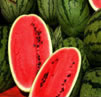 Commodity Specific Food Safety Guidelines for the Fresh Watermelon Supply Chain
Second edition of the National Watermelon Association’s food safety program for farmers and packers. Includes focused information on field production, harvest practices, packing houses and more.
Fresh Produce Safety Guidance for the Watermelon Supply Chain
The National Watermelon Association collaborated with experts from industry, government and academia to identify microbial food safety issues that are unique, but not necessarily exclusive, to watermelons. This document raises awareness about each issue and helps operations determine actions that are appropriate for their operations.
General Fruit Guidance
Good Agricultural Practices for the Production and Handling of Strawberry, Raspberry, Blackberry and Blueberry
This bi-fold pamphlet from N.C. State focuses on how to best reduce the risks of contamination through preventative on-farm measures.
Management of Microbial Food Safety in Fruit Packing Houses
Extensive resource on food safety in fruit packing houses, concentrating on apples. The document was developed in Australia, but much of the content is applicable regardless of location.
Hand Hygiene for Farm Management
Harvesters Keeping Your Hands Clean
The NoroCORE Team has developed one-page information factsheets for the berry industry, one specifically for farm management and one for harvesters. These information sheets explain the risks posed to the berry industry by norovirus and hepatitis A virus contamination, as well as important measures that can be taken on the farm to control and prevent virus contamination of berries. Click the links below to view and download PDFs of the information sheets.
Foodborne Viruses on Various Foods Factsheets
These instructions, from USDA NIFA, provide a guideline to teach consumers about food safety issues related to foodborne viruses on various foods.